AI Side Project
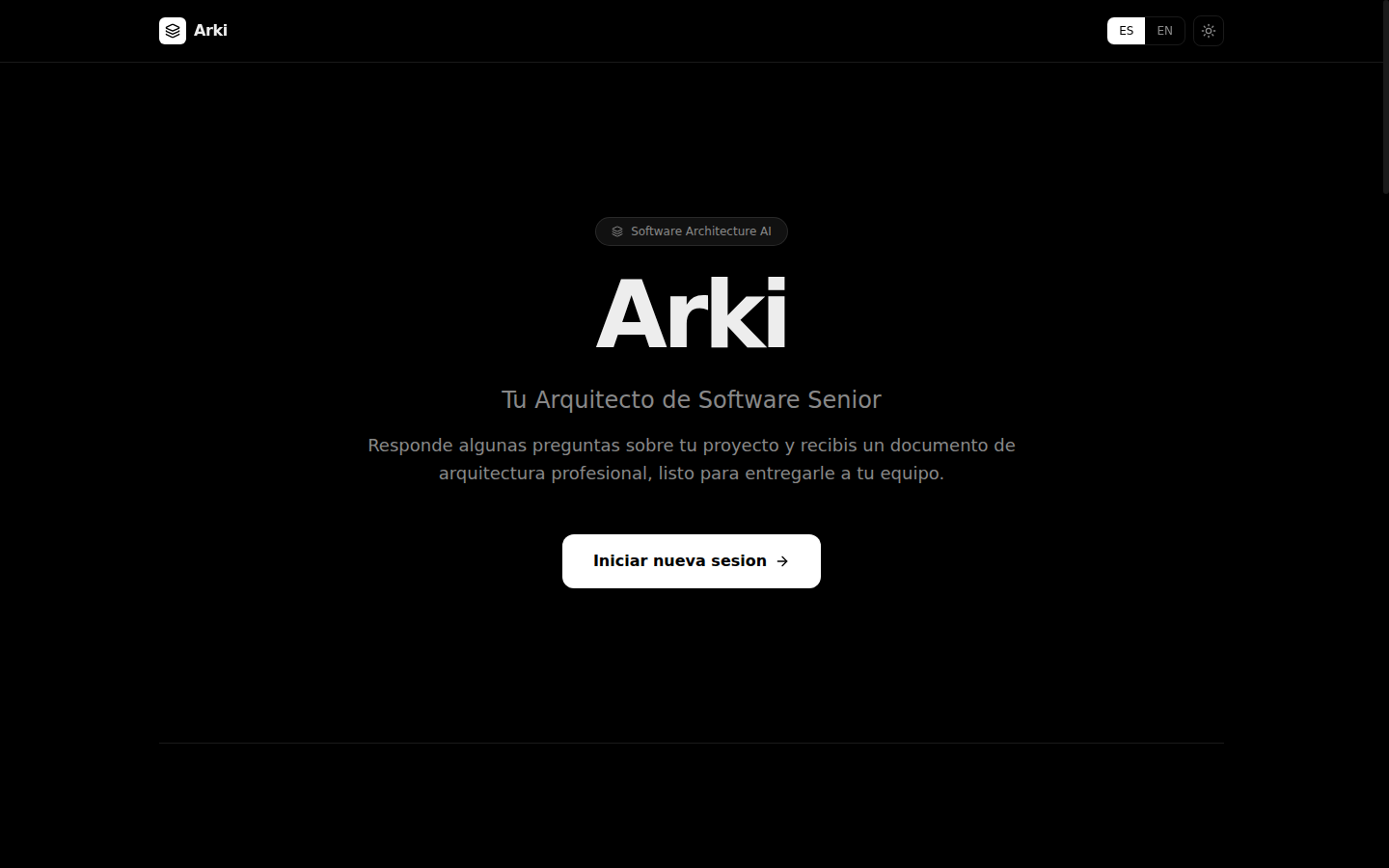
Arki: AI Software Architect
Pre-code tool that generates Architecture Blueprints and Dev Specs through an AI interview. Turns ideas into solid architectures before the first commit.
Tech stack
The technologies used and why.
Screenshots
The problem
Bolt, v0 and Cursor make it easy to turn an idea into code. The problem is that nobody asks the architecture questions before the first line is written.
Apps that work in demos
Bolt and v0 generate working code in minutes. But without upfront questions about scale, concurrency or data sensitivity, the result is a prototype disguised as a product.
Technical debt from day zero
When architecture is not decided explicitly, it gets decided anyway: by default. And reverting those decisions in production costs ten times more than getting them right at the start.
The senior architect is not always available
Not every team has access to someone who asks the right questions before starting. Arki closes that gap for founders, small teams and independent developers.
AI prompts without context
Pasting “build me an app for X” into Claude Code or Cursor without clear specs produces generic code. Arki’s dev specs give the agent the context it needs to generate real code.
The solution
Arki sits between your idea and your first AI prompt: it interviews you, understands your context and generates a complete blueprint with documented decisions and ready-to-use dev specs.
Guided interview
Arki asks you key questions about scale, team, data sensitivity, real-time needs and budget. No forms. One question at a time.
Architecture blueprint
It generates a complete document with a Mermaid diagram, documented architecture decisions (ADRs), an observability plan and a recommended stack per layer.
Ready-to-use Dev Specs
It exports folder structure, database schema, API contract and agent instructions. Paste them into Claude Code or Cursor and start building.
Technical architecture
The most important decision was to use two Claude models in sequence: Sonnet for the interview (speed, cost) and Opus for the blueprint generation (maximum technical depth).
Why Next.js 15 + React 19
The app has two very different parts: the interview flow (token streaming, reactive UI) and the blueprint generation (structured document, possible download). Next.js App Router with Server Components for the static parts and Client Components only where there is interactivity. React 19 for the improvements in handling loading states with Actions.
Why Drizzle + PostgreSQL instead of a more common ORM
Drizzle is type-safe by design: the database schema and the TypeScript types live in the same place. For an app where the schema evolves with every new feature, that removes an entire category of bugs. PostgreSQL because architecture sessions have a semi-relational structure (a session has multiple exchanges, each exchange has a state).
Response streaming
The interview uses the Vercel AI SDK to stream Claude Sonnet tokens directly to the client. The blueprint (which can be long) is generated in an API route and saved to the database before being shown. This avoids timeouts on Vercel with long responses.
Features
- Guided interview: 6 to 10 exchanges where Arki asks the right questions: expected scale, data sensitivity, real-time needs, budget, team size.
- Architecture blueprint: Complete Mermaid diagram, ADRs (Architecture Decision Records), observability plan and recommended tech stack layer by layer.
- Exportable Dev Specs: Folder structure, database schema, API contract and agent instructions ready to paste into Claude Code, Cursor or Bolt.
- Session history: Saves every architecture generated. Resume a previous session, compare them or iterate on an existing design.
- Multilingual: Supports Spanish and English. The interview and blueprint are generated in the language you prefer.
- Claude Sonnet + Opus: The interview uses Claude Sonnet for speed. The blueprint generation uses Claude Opus for maximum technical depth.
Current status
Arki is in active development. The interview and blueprint generation are working in production. The next features are PDF export, team collaboration and templates per industry/project type.